
Active projects, abandoned schemes, & ideas still pinned to the wall
Walla Walla Winery & Tasting Room
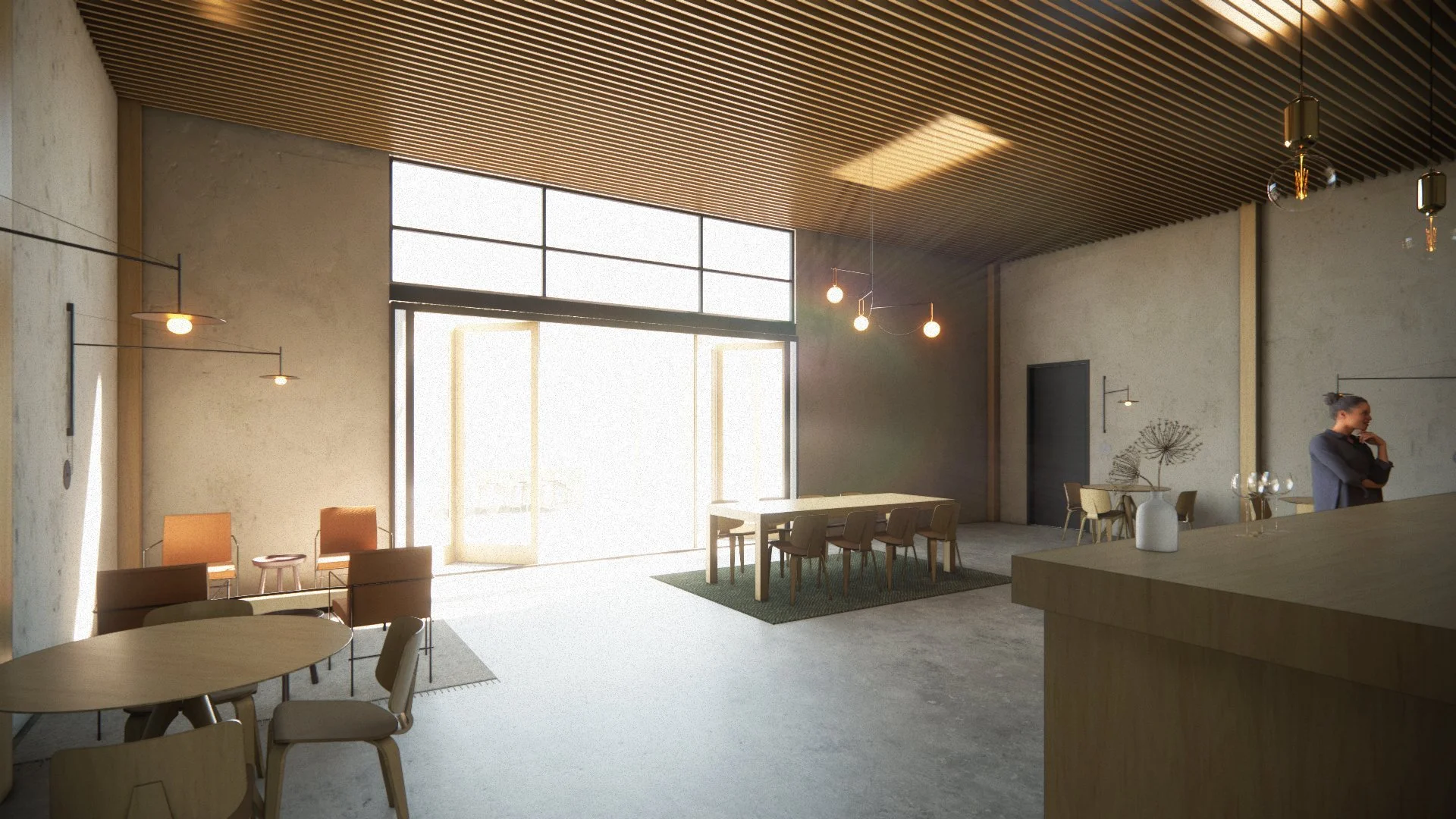
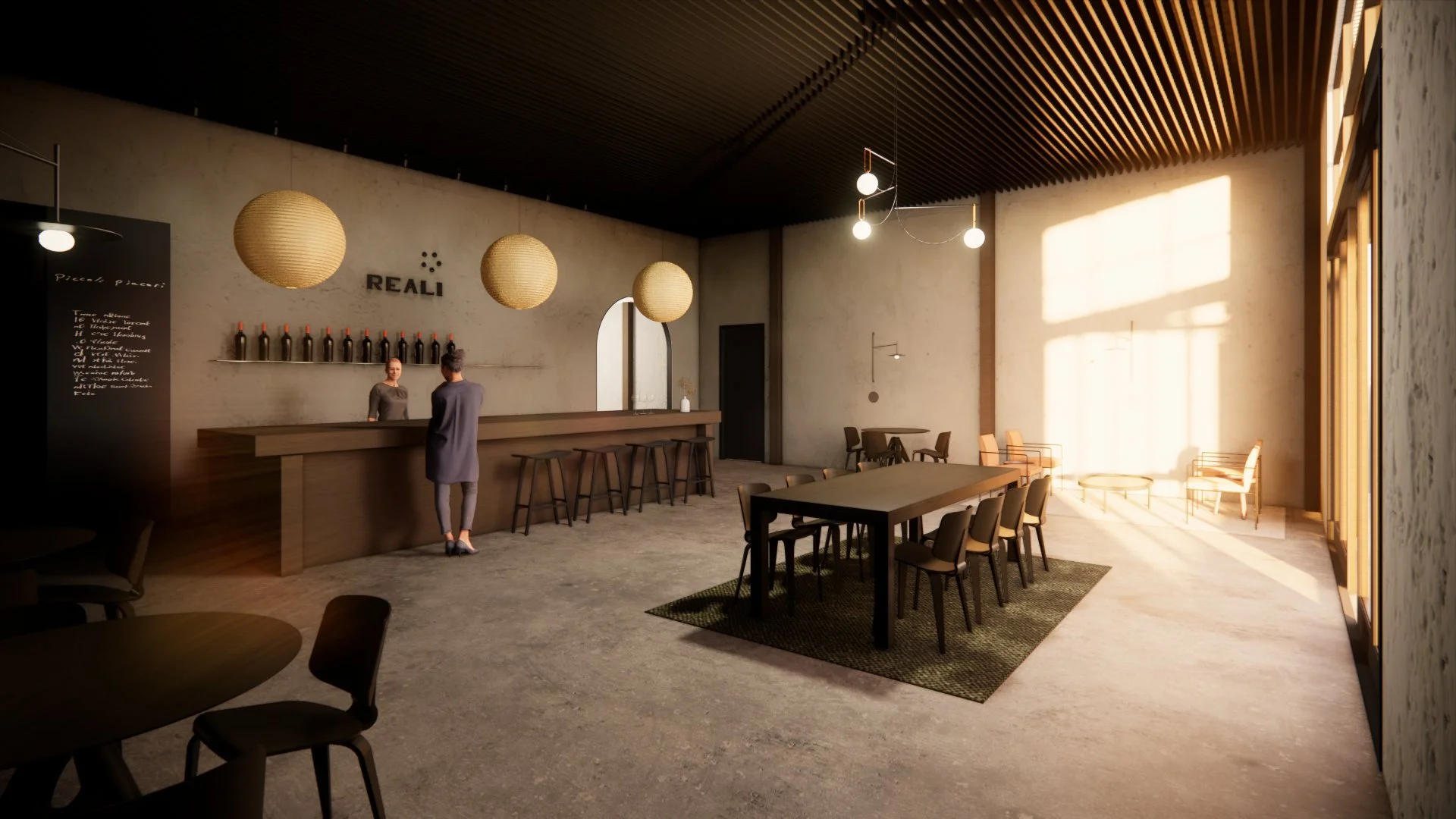
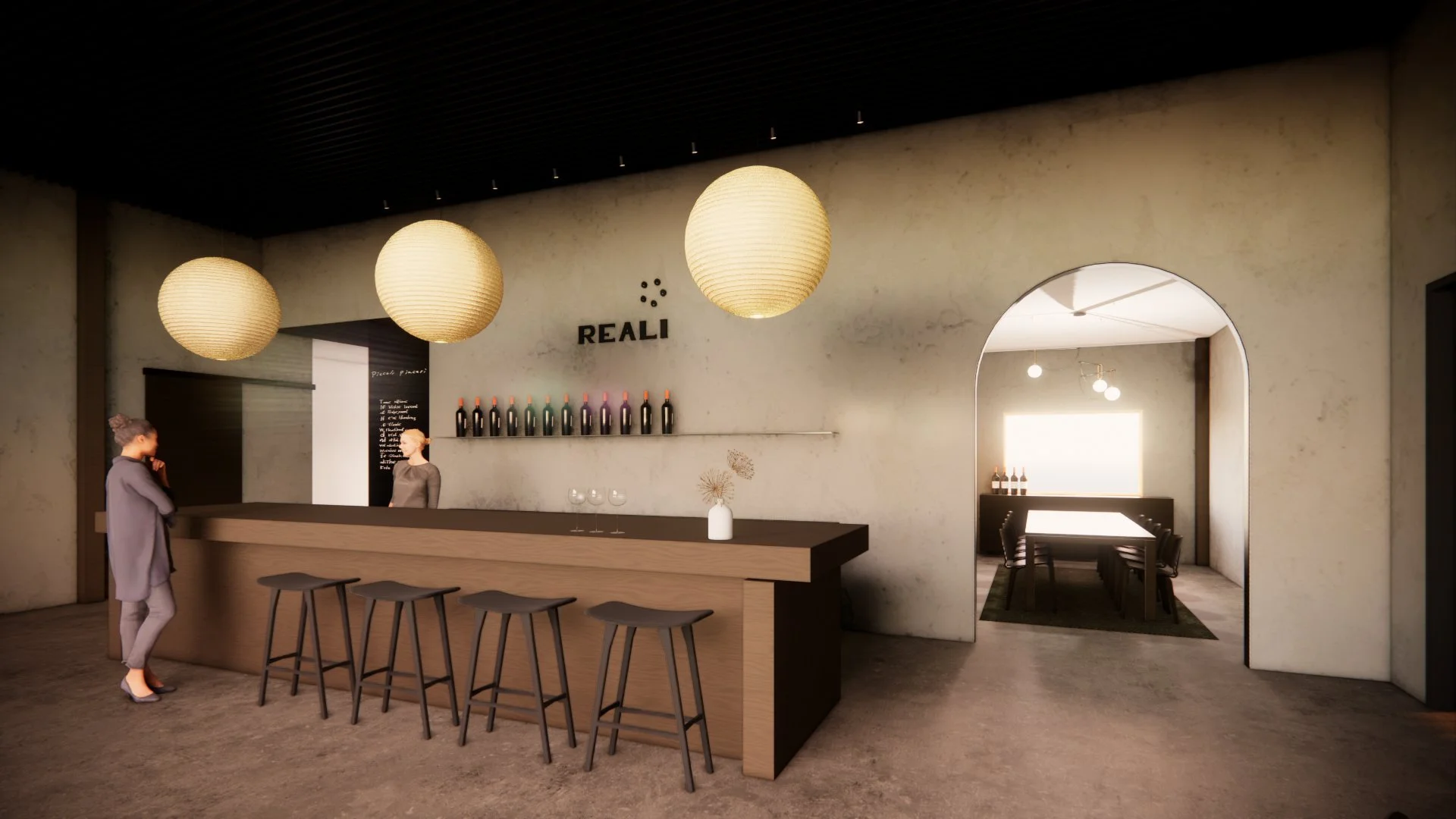
This project converts an existing agricultural building in Walla Walla County into a boutique winery and tasting room for a new producer focused on Italian varietals. The brief called for a space that could flex between the functional demands of wine production and the more relaxed rhythms of a tasting experience — a balance that shapes everything from the layout to the lighting.
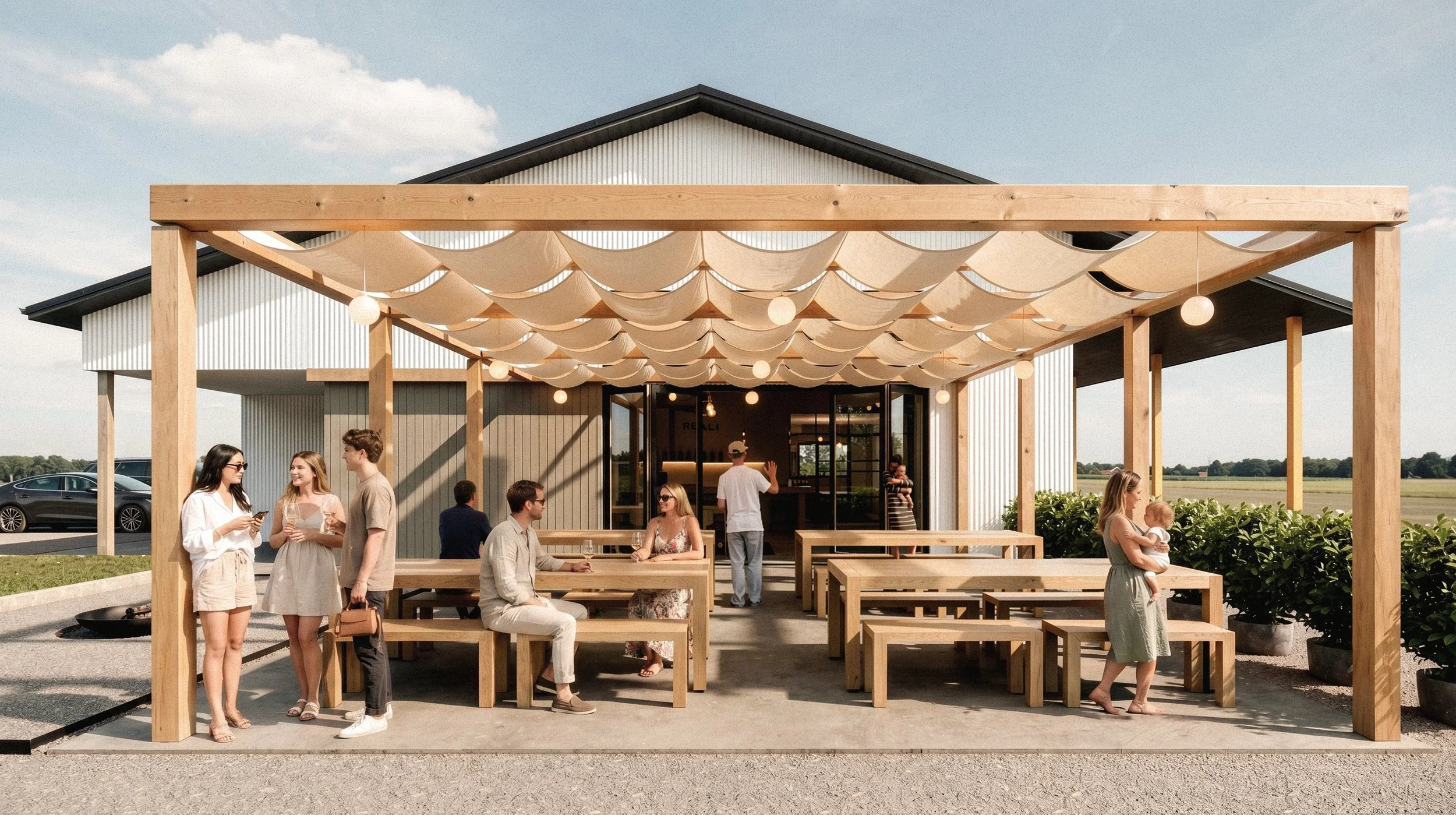
The interior palette is intentionally restrained: plaster walls, polished concrete floors, and wood slat ceilings keep the focus on the wine and the room itself. Smaller pendants and wall-mounted fixtures on adjustable arms let the seating arrangements shift without the space feeling locked in. On the exterior, a heavy timber trellis with shade fabric extends from the north side, turning what could have been leftover space into a proper outdoor room for the warm Walla Walla summers.
Working in Walla Walla wine country means understanding agricultural buildings, county permitting, and a client community that values craft above everything else. This is one of several projects we've been brought in on in the Walla Walla area. More on how we approach work in wine country on our Walla Walla architect page.
You can’t fake patina, and you shouldn’t try. We design spaces to take a beating and look better for it.
-FR
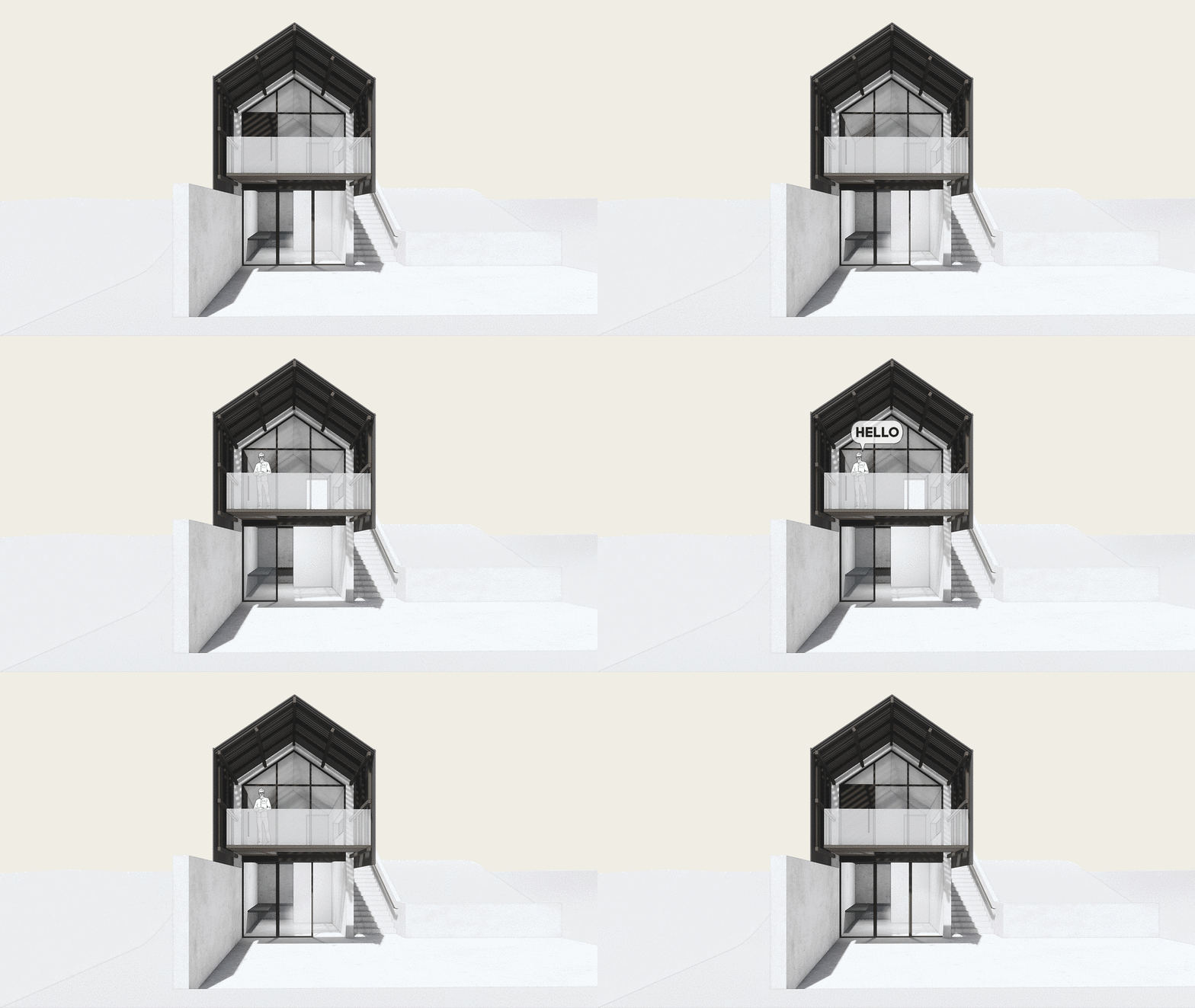
Montlake DADU - 2023
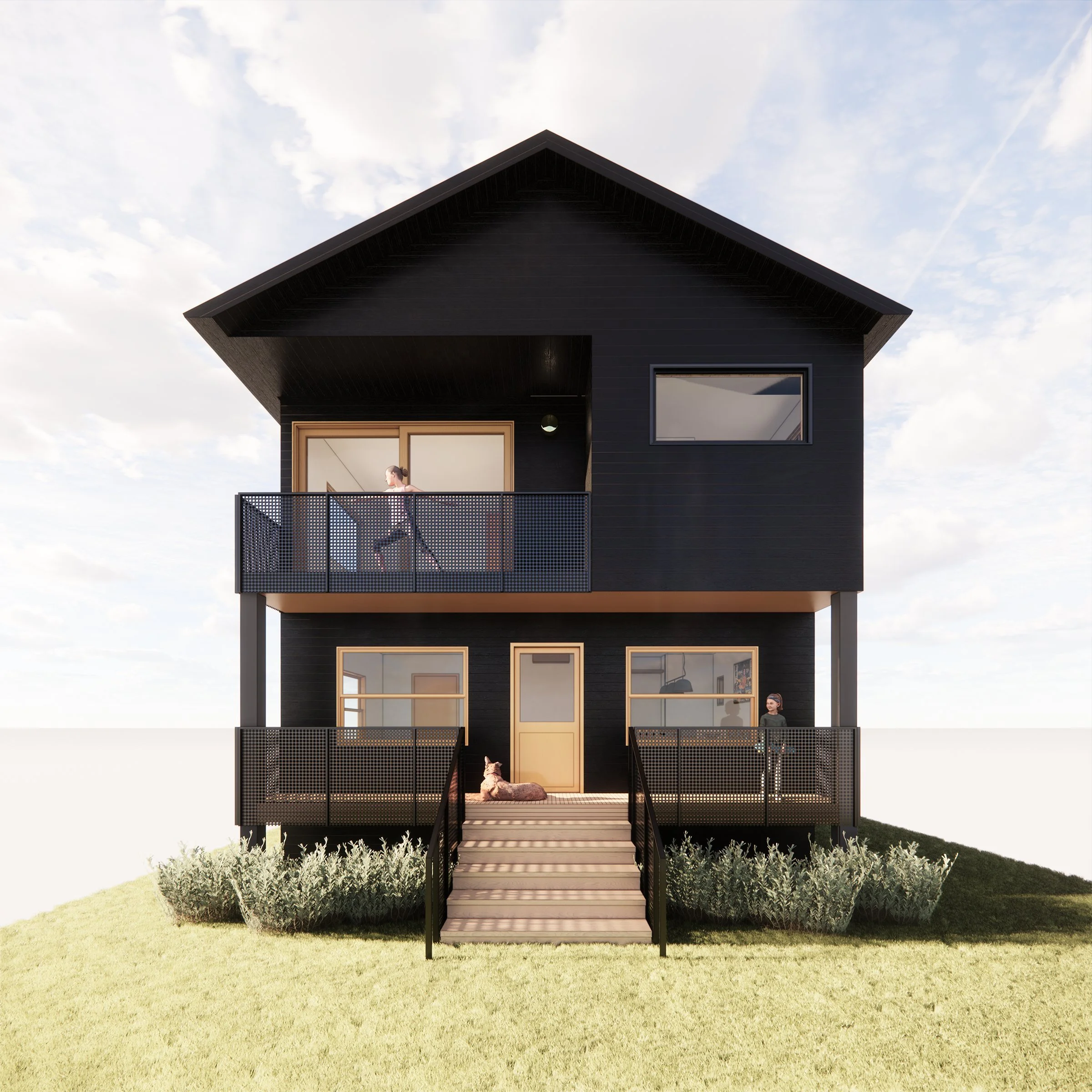
Blackbird - 2023
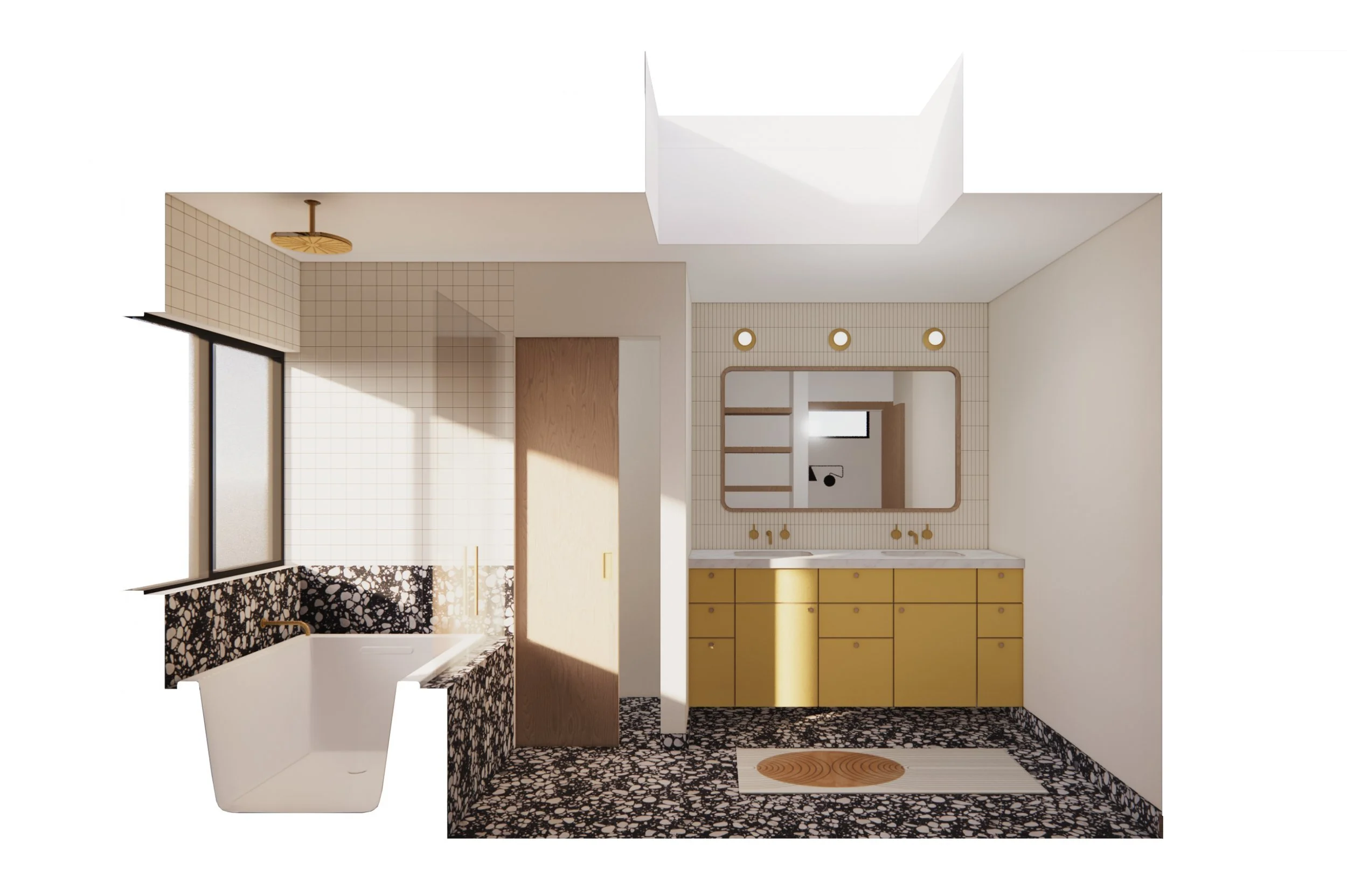
MCM Bath Remodel
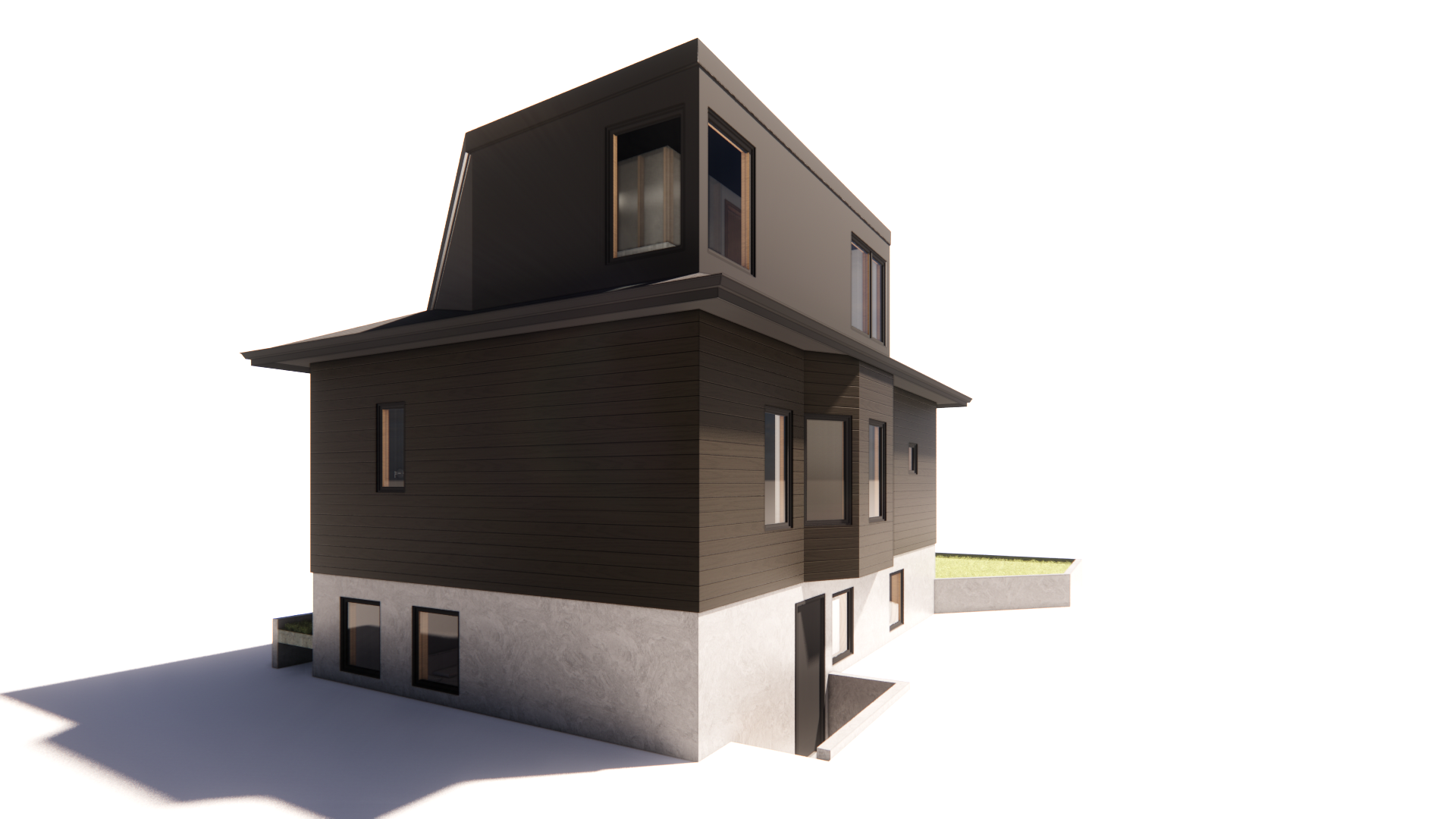
Queen Anne Attic Conversion
the ufo has landed
revision 5: the one we REALLY liked
Bend, Oregon Residence
A new single-family home in Bend, Oregon, designed around two site constraints that became the project's best features: an old-growth juniper at the entry court that the placement of the house was organized to protect, and a long view toward Smith Rock that determined the building's orientation. Currently in construction.
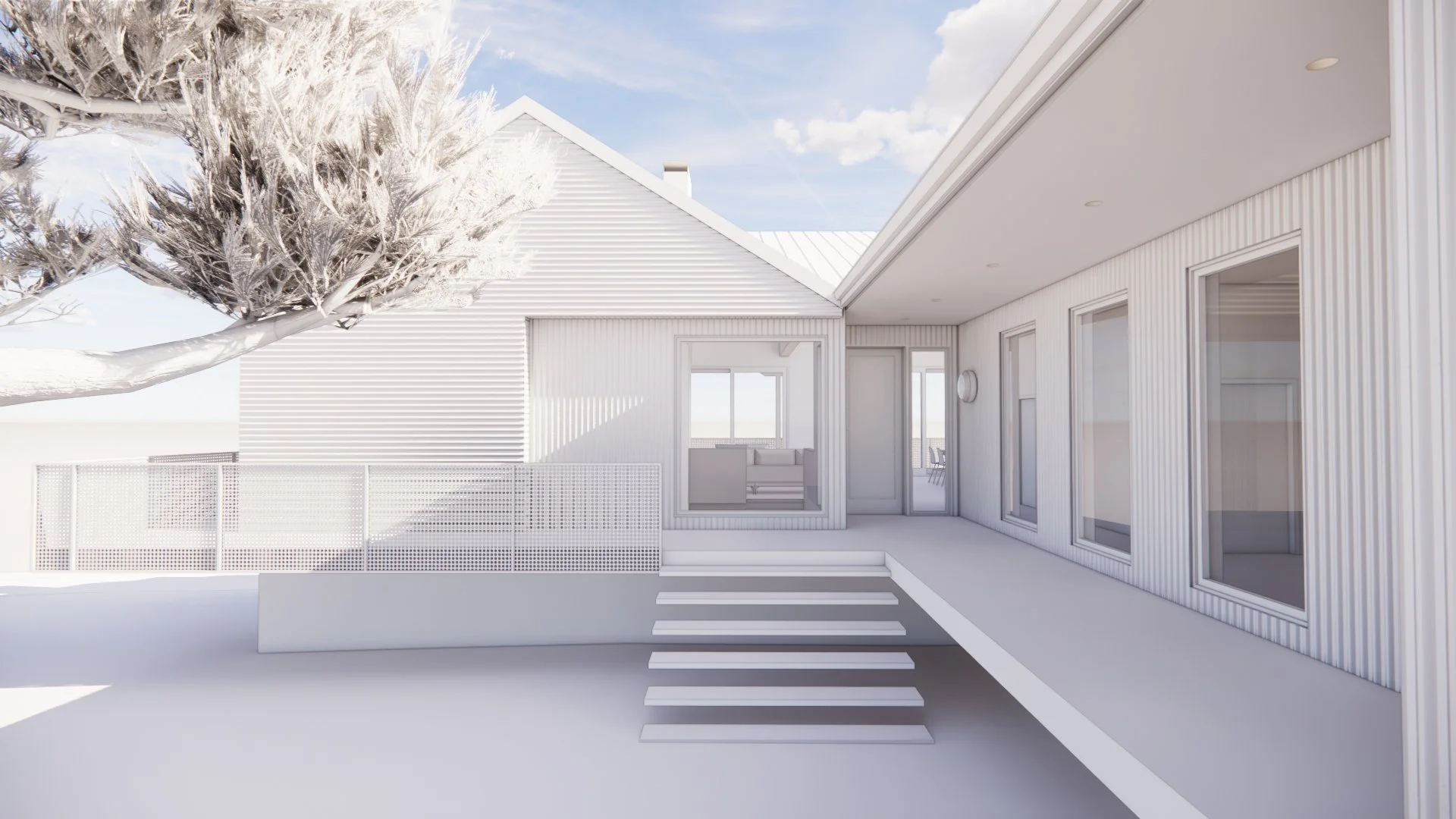
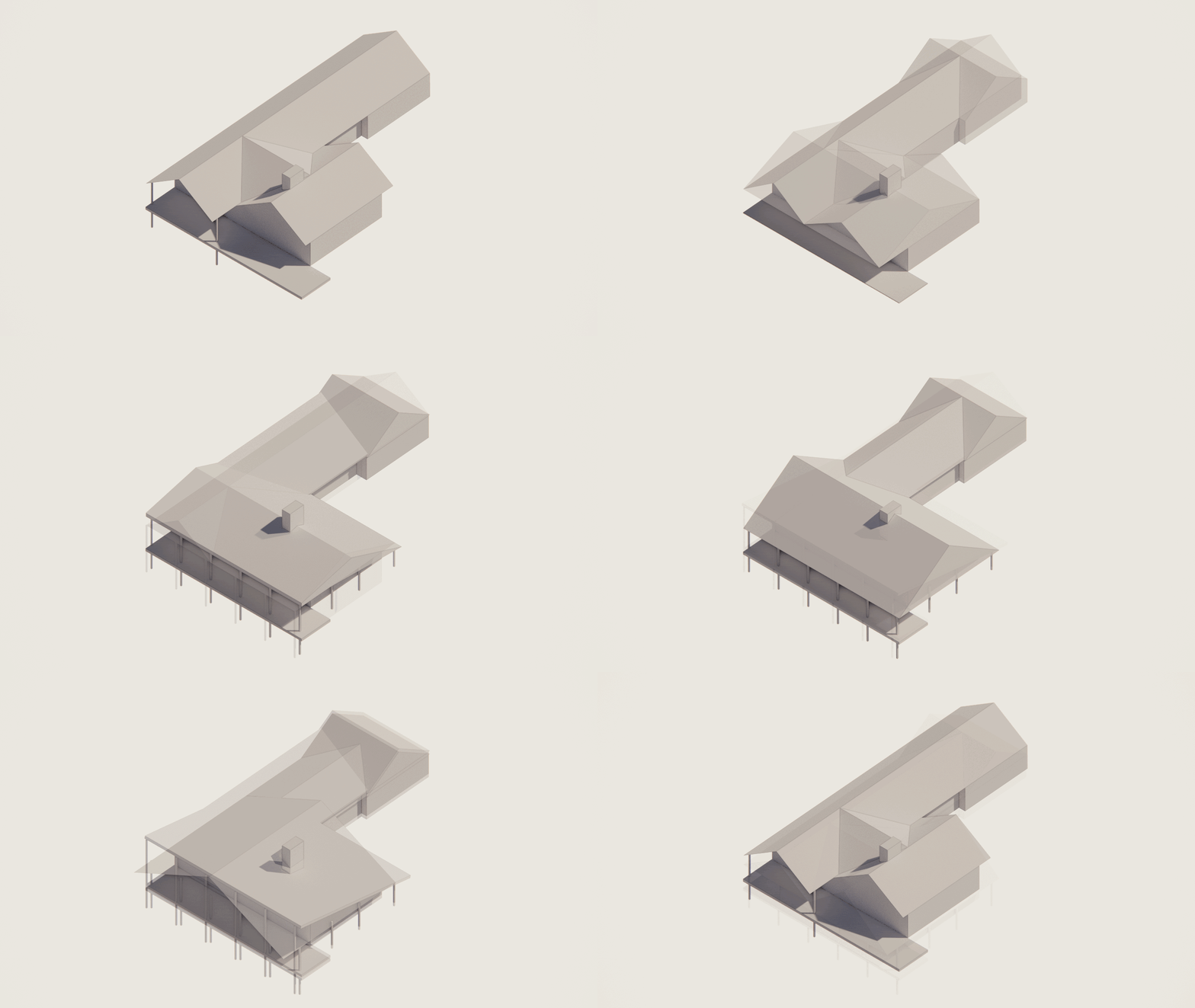
form finding: 14 iterations
West Seattle Brewery Pavilion
*
West Seattle Brewery Pavilion *
An all-season outdoor patio expansion for a West Seattle brewery, more than doubling existing seating capacity. A sawtooth roofline of repeating timber modules keeps the structure from reading as a single shed. Clear polycarbonate on the upper verticals, opaque panels overhead.
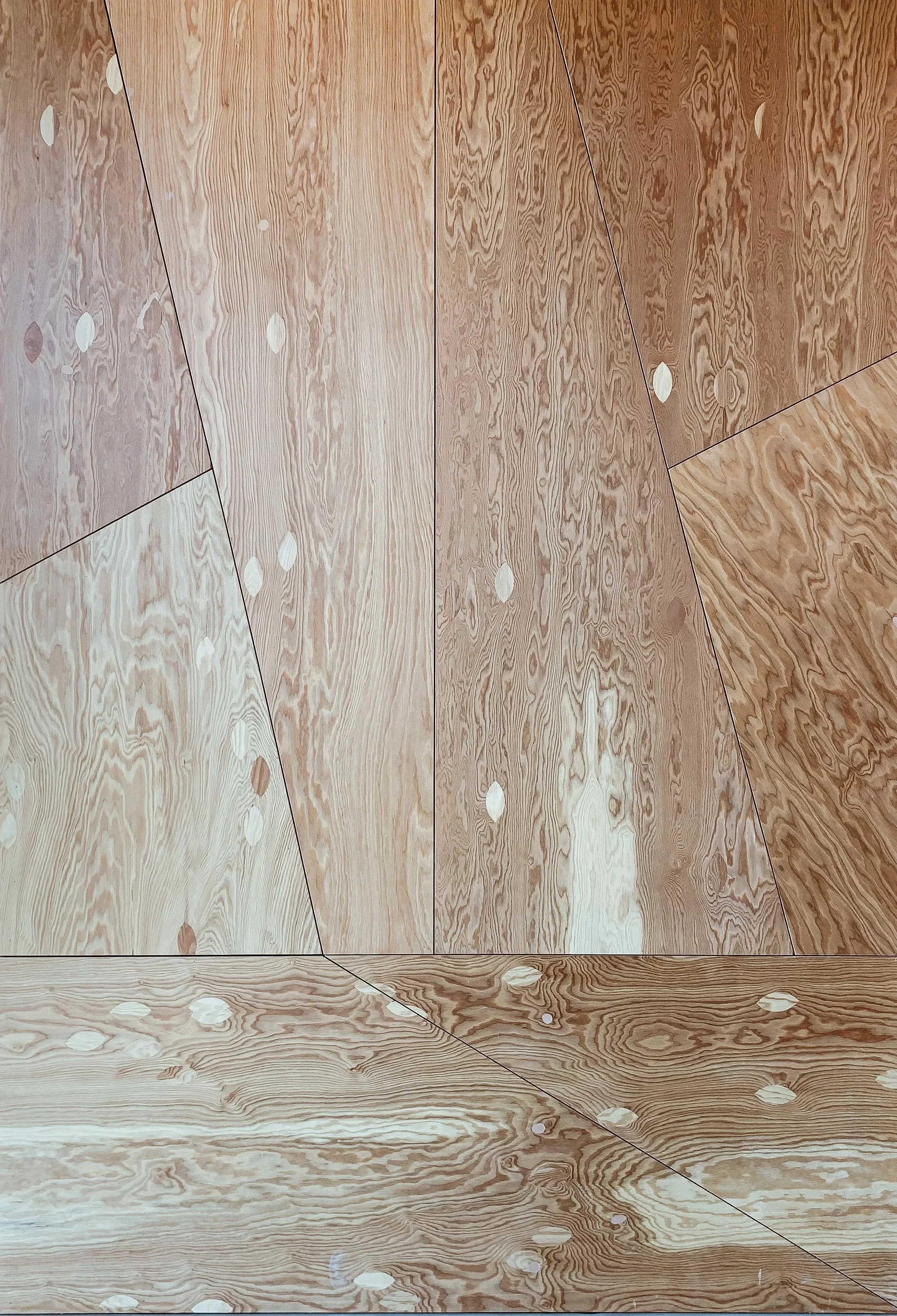
ACX Ply
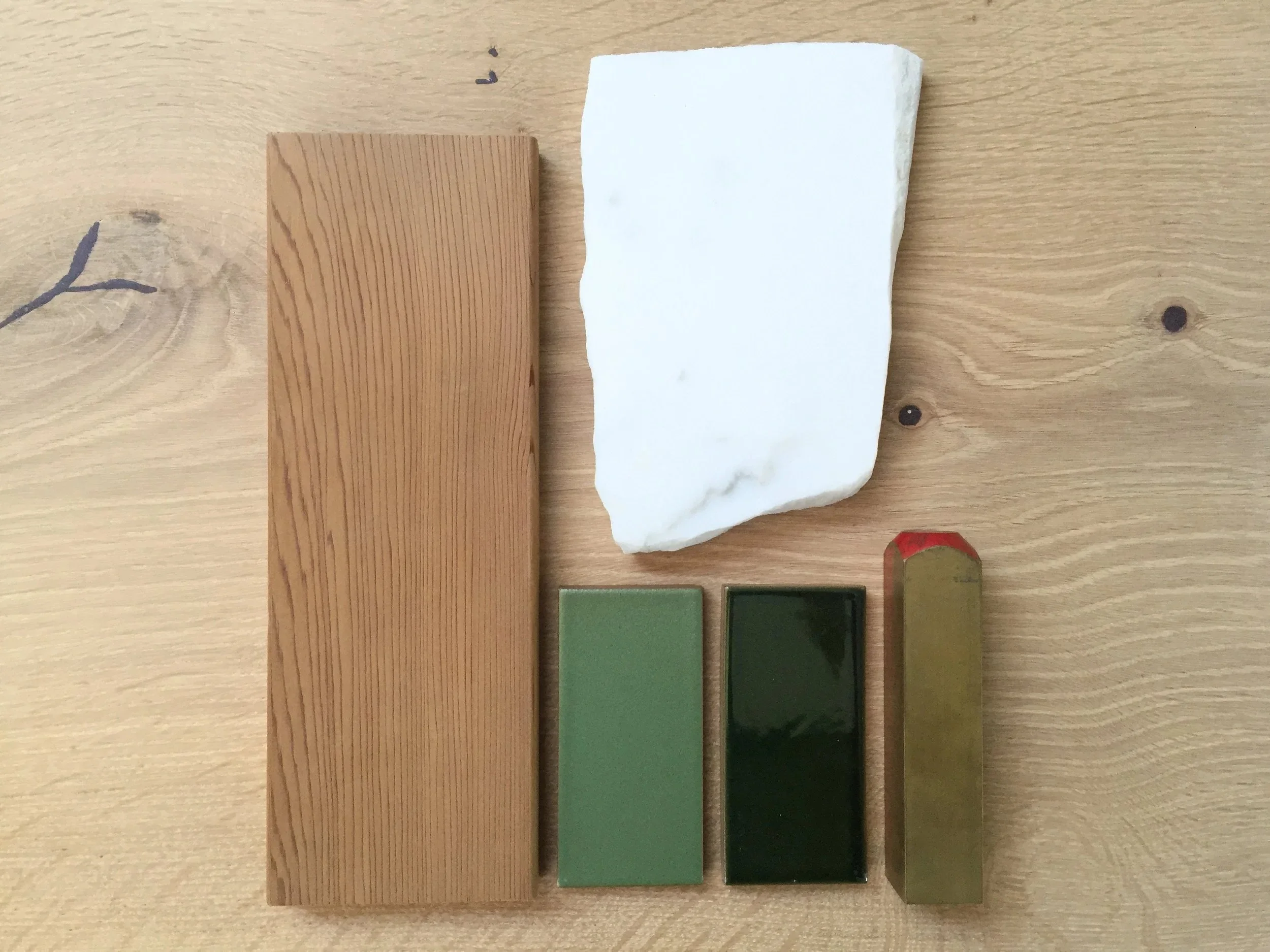
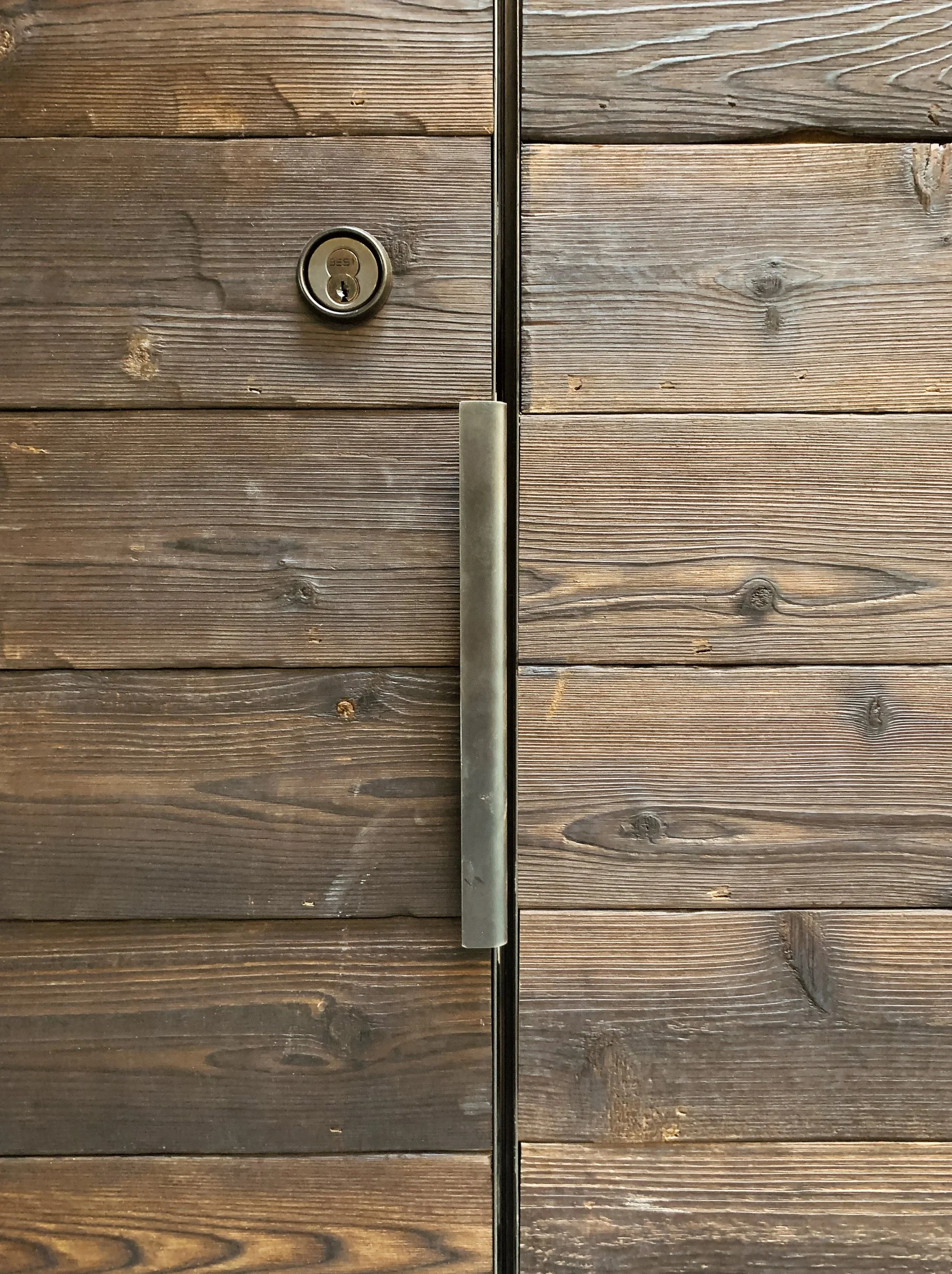
Custom Bronze Finger Pull
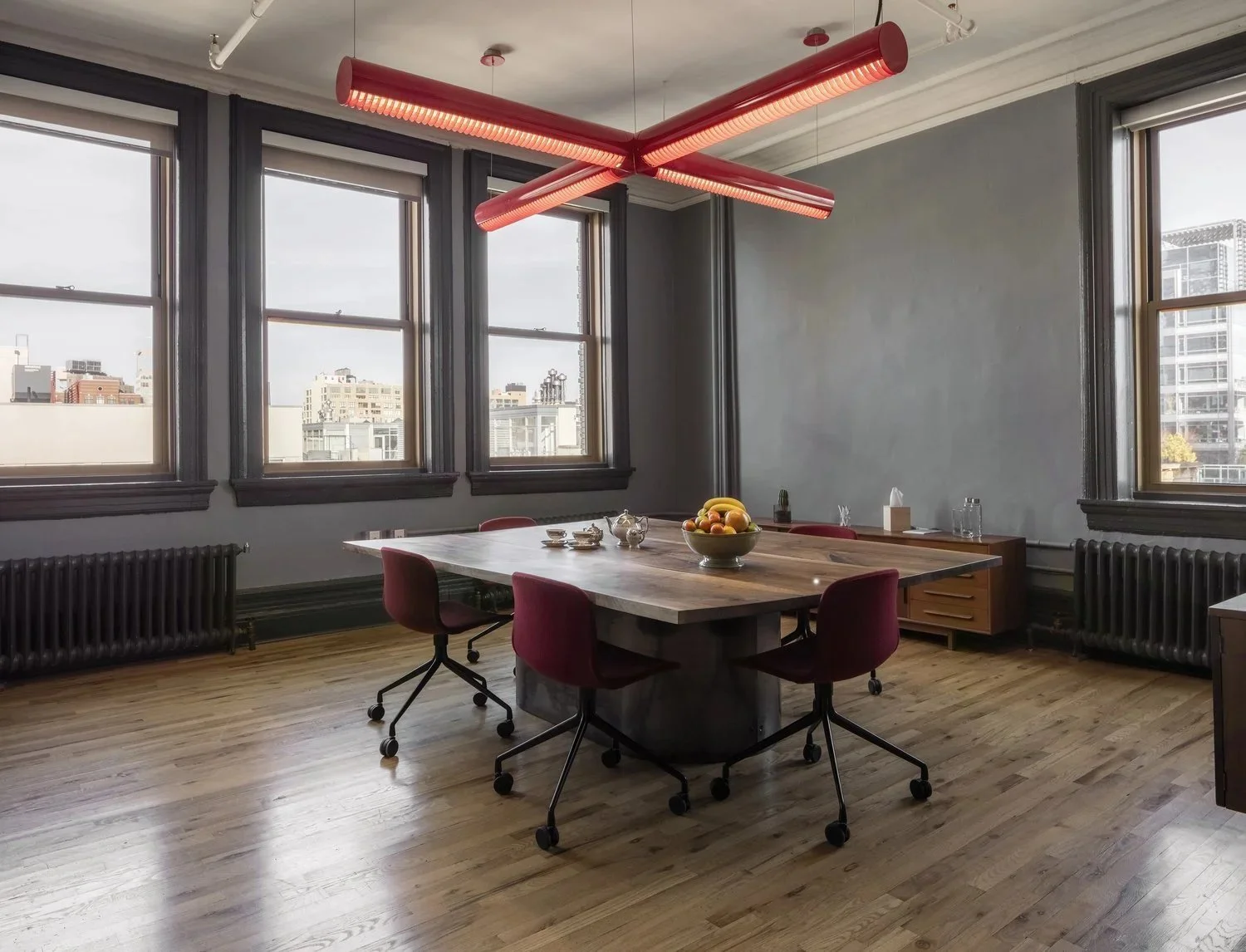
nyc
Things we keep coming back to:
The plan is a lie until the section proves otherwise
Site constraints are design opportunities in disguise
Material selections at 3pm look different at 9am
The best clients know what they want but not how to get there
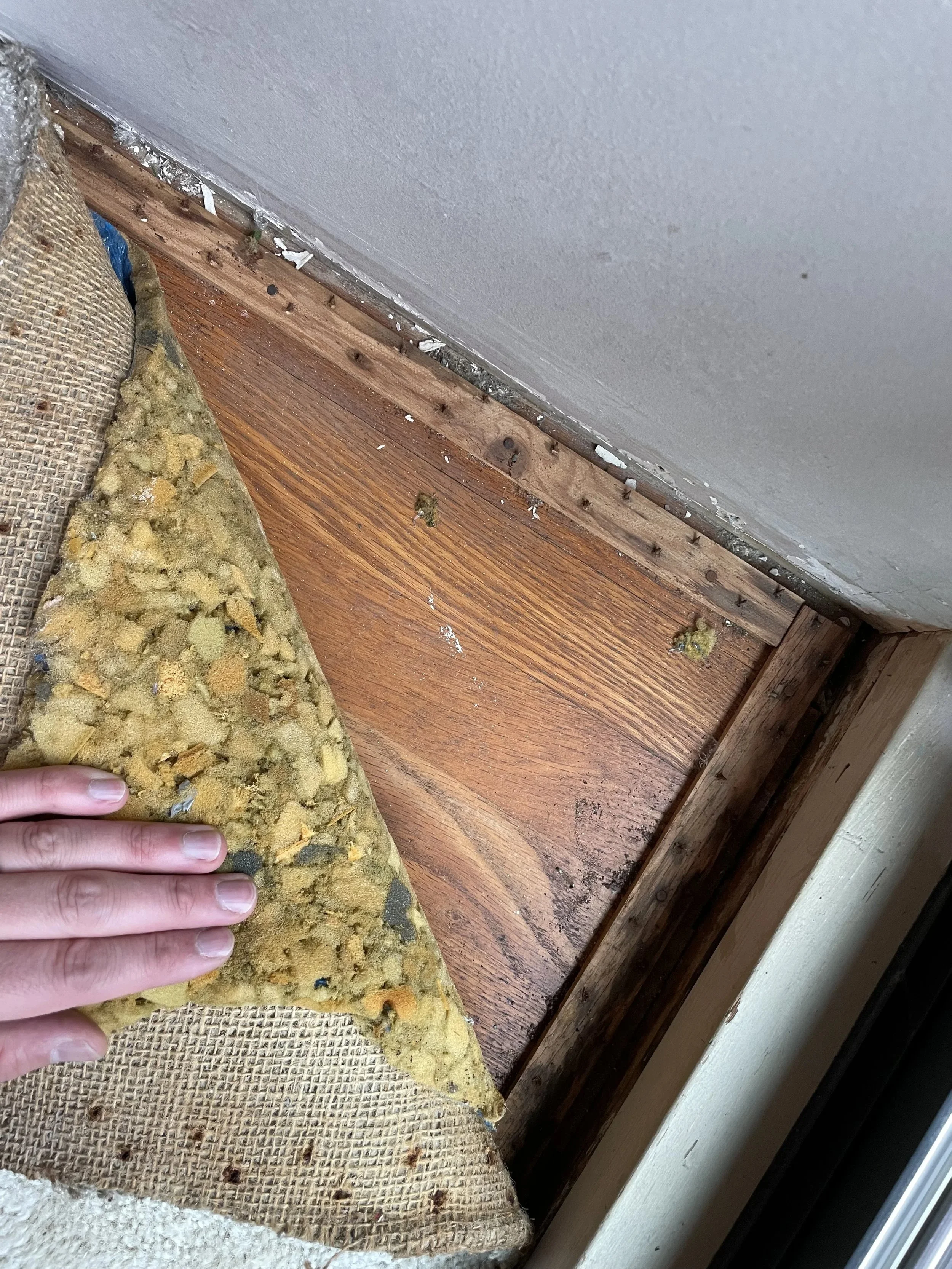
!!!
Orcas Island Conversion - Yoga Studio, Office & Guest Suite
A garage conversion on a rural San Juan Islands property, adapted into a home office, yoga studio, and guest suite. Custom casework integrates storage, workspace, and a pull-down Murphy bed. Currently under construction.
Building on Orcas Island means coordinating around ferry schedules, island-based contractors, and San Juan County's permitting process - logistics we've learned to plan for carefully. More on how we approach remote project delivery on our San Juan Islands page.


Orcas Island Sauna
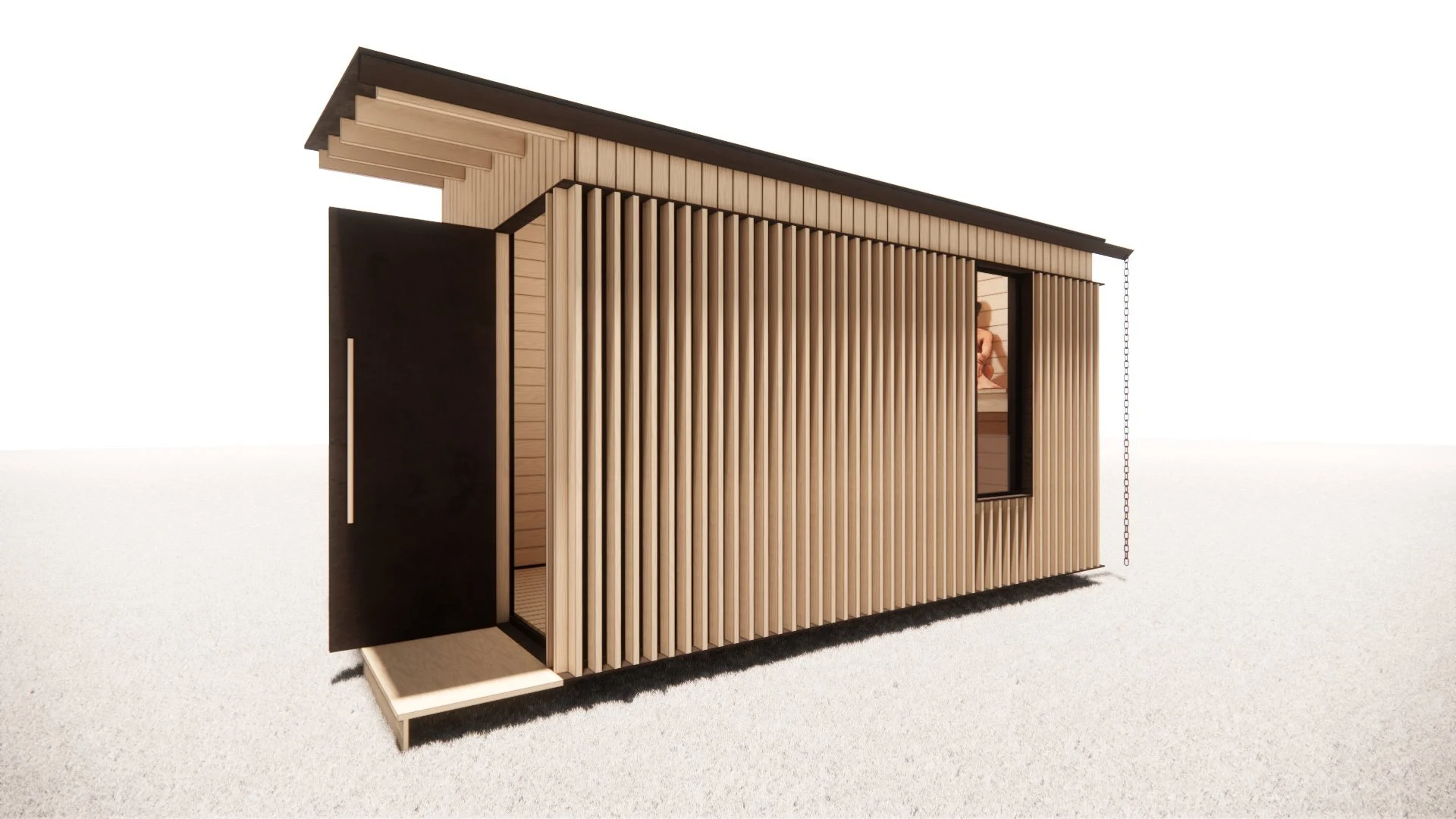
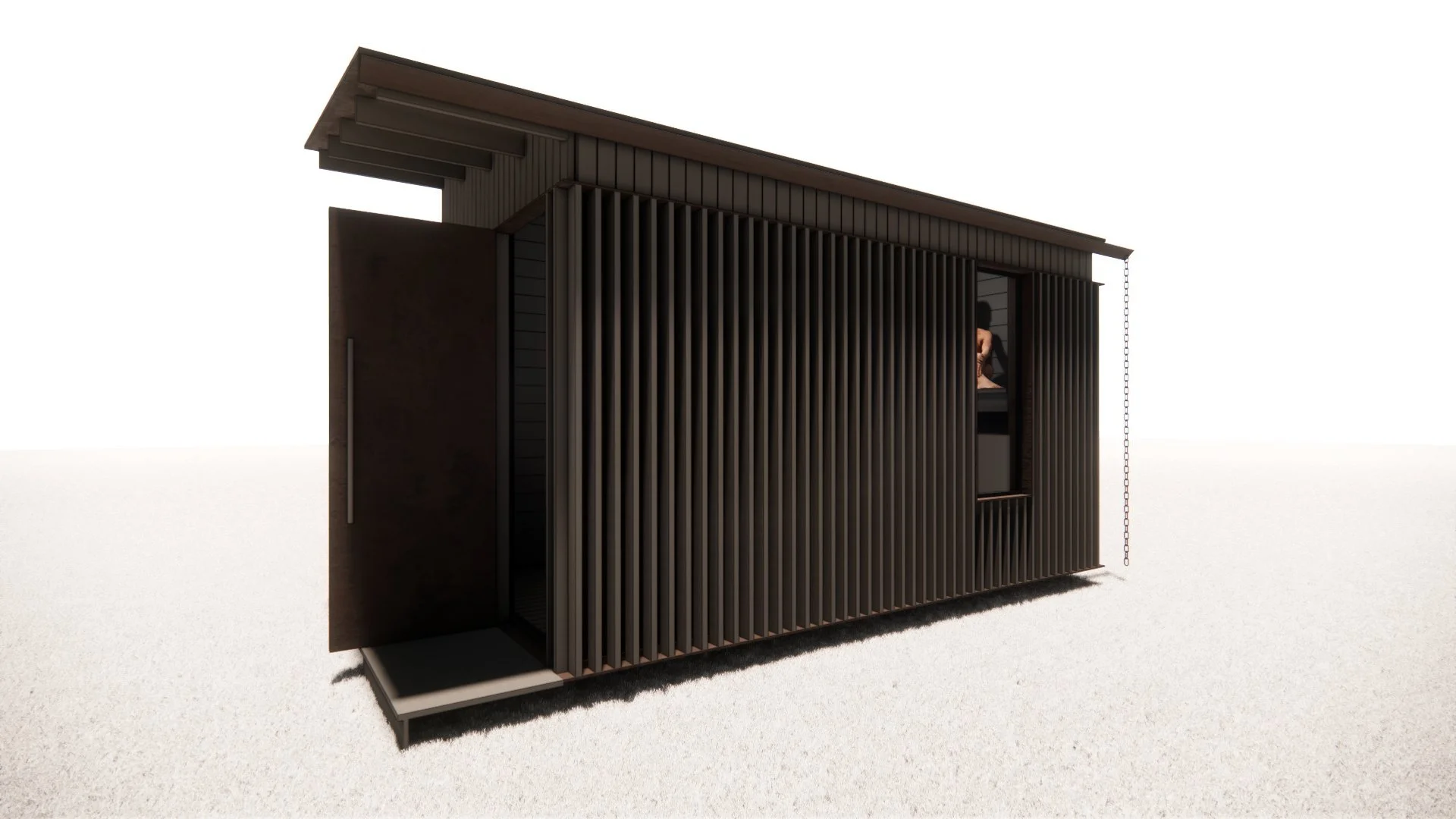
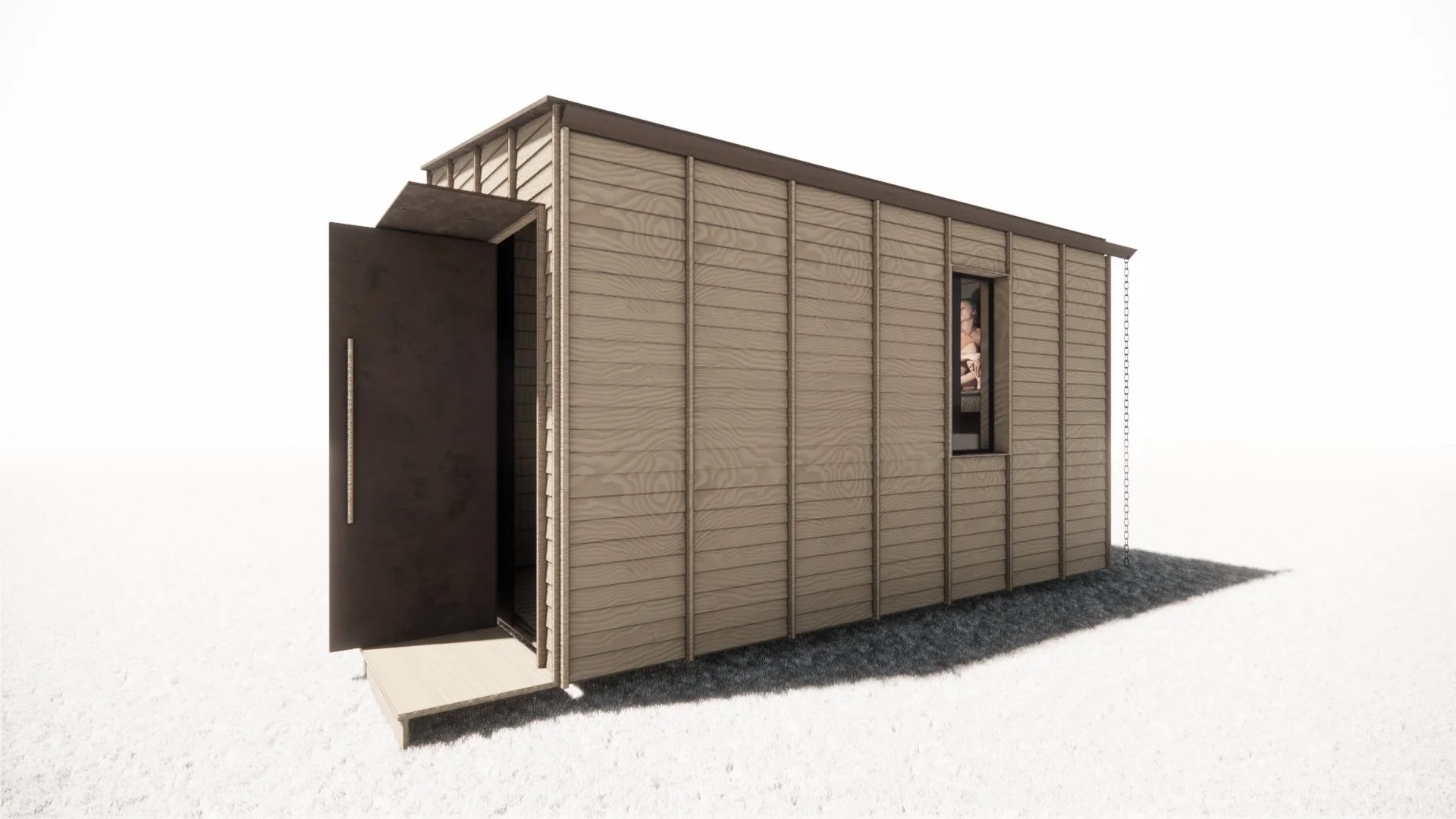
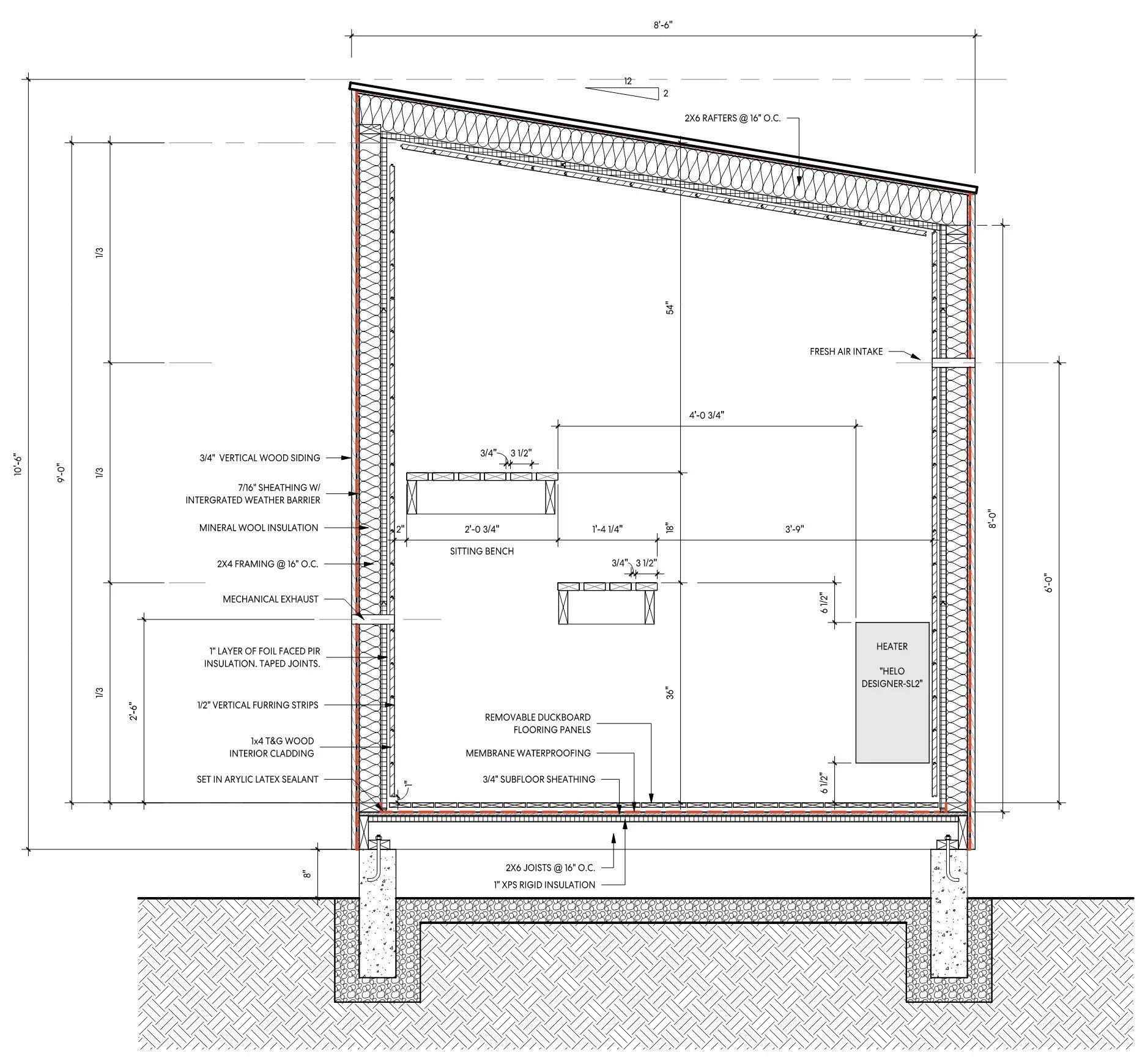
A prototype sauna designed to Finnish standards, prefabricated for transport by flatbed truck to a site in the San Juan Islands. The brief required strict adherence to traditional sauna geometry - heater placement, ceiling height, bench configuration, the vestibule sequence - while engineering every component for off-site fabrication and reassembly. The exterior facade was the open question: whether to blend into its setting or read as a distinct object. We landed on a textured, detail-rich surface that makes the case for the latter.
The result is a sauna that could live anywhere in the San Juan Islands - or beyond - while remaining connected to its Finnish origins. It's part of a broader body of residential and accessory structure work we do throughout the islands, detailed on our San Juan Islands architect page.
assembly instructions: do not lose
Woodinville Wine Tasting Room - The Yard at Harvest
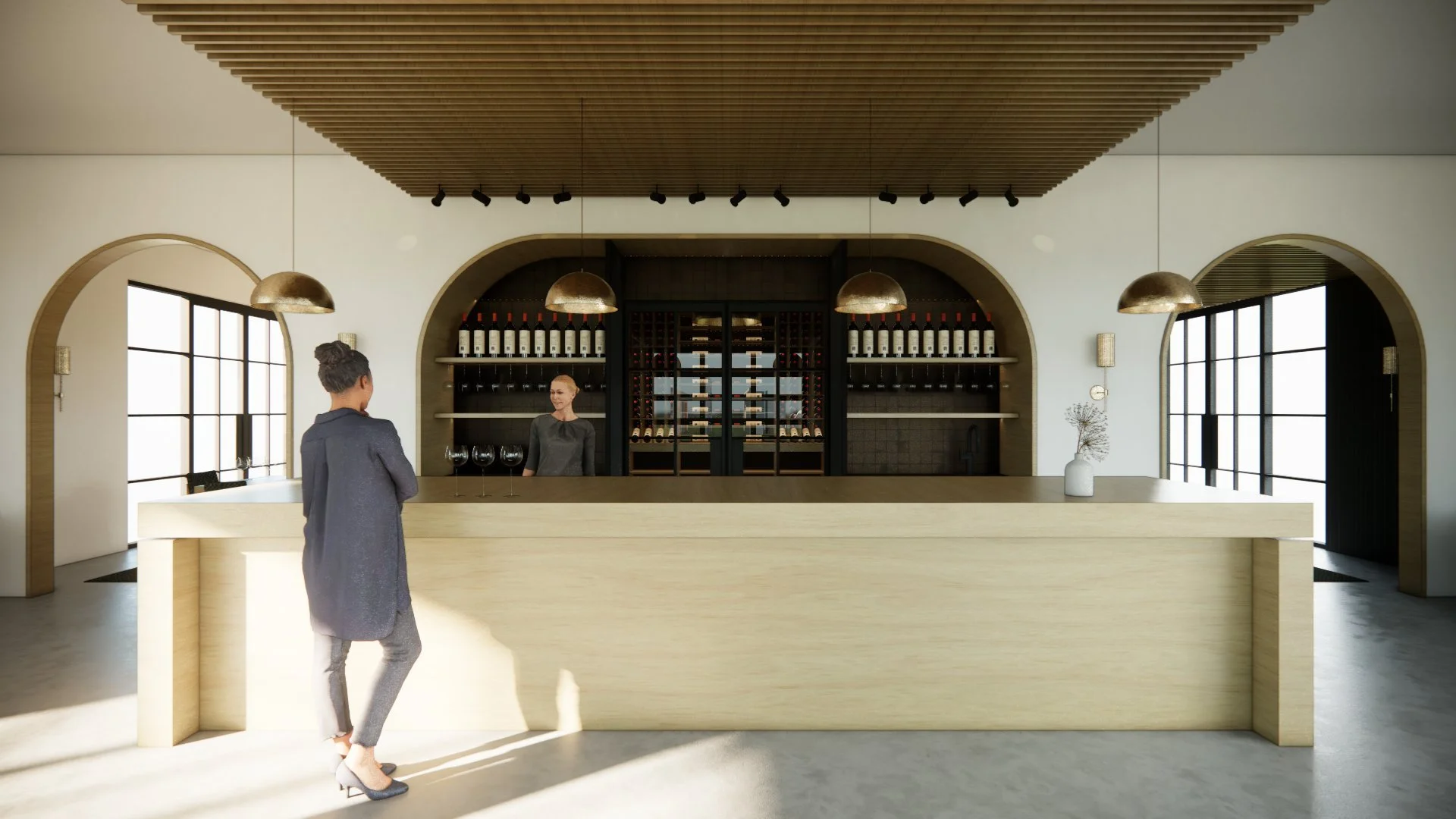
A 1,300 sq ft tasting room at The Yard at Harvest in Woodinville, WA. White oak bar, brass pendants, glass-enclosed cellar, arched doorways to side seating. Designed for the kind of afternoon that runs longer than planned.
BARRIER BETWEEN GUEST AND INVENTORY
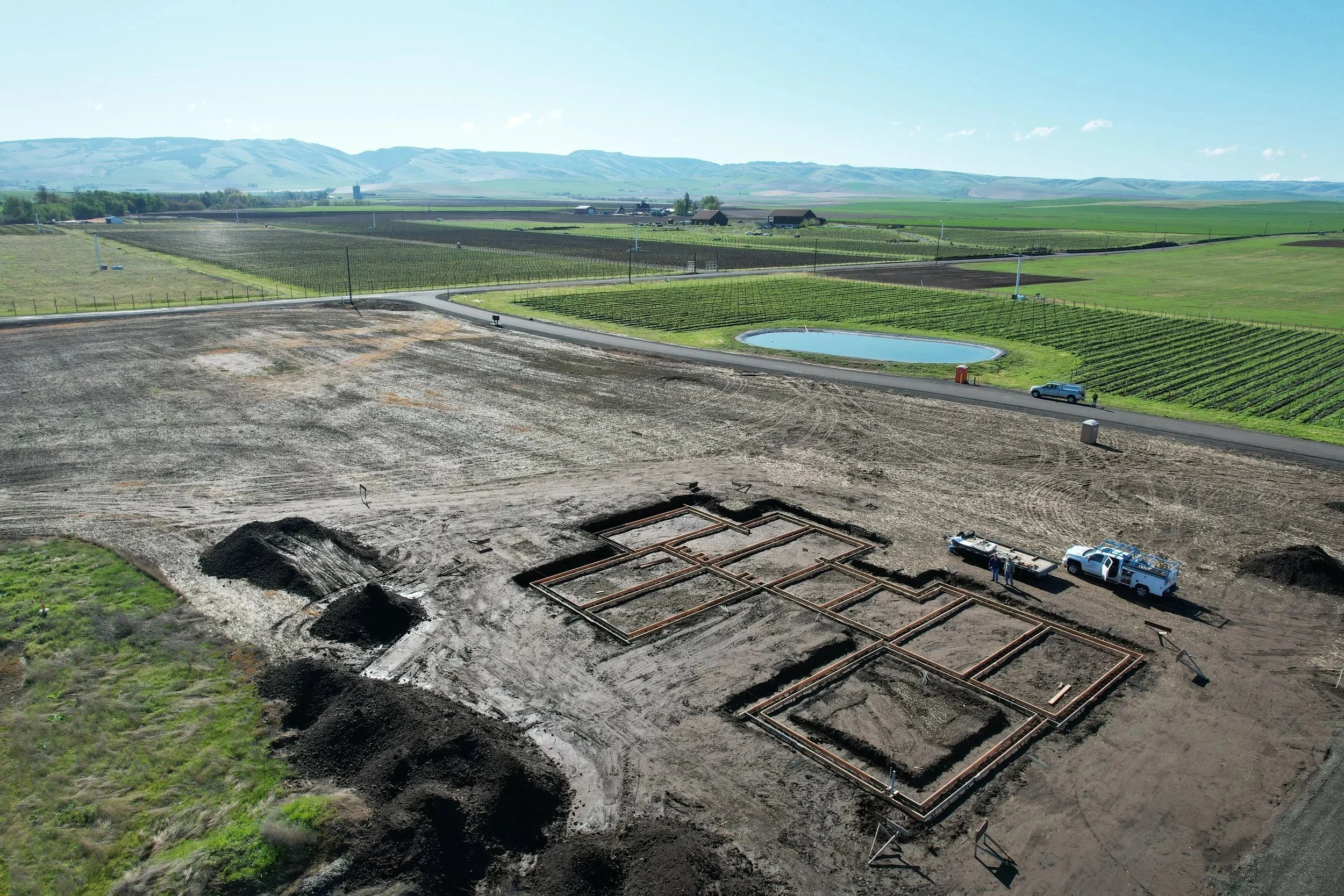
blue mountain views - Walla Walla
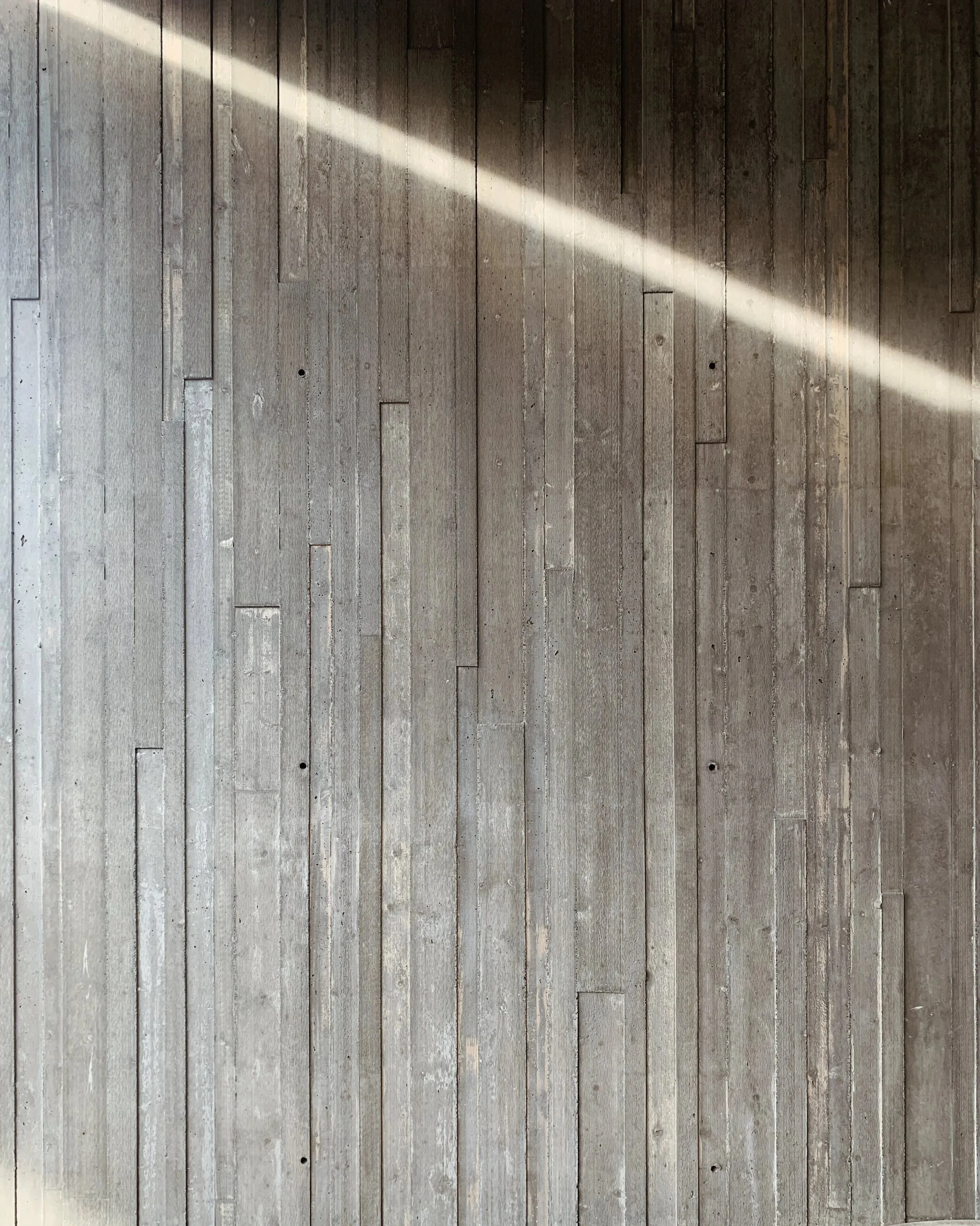
Board Formed Concrete
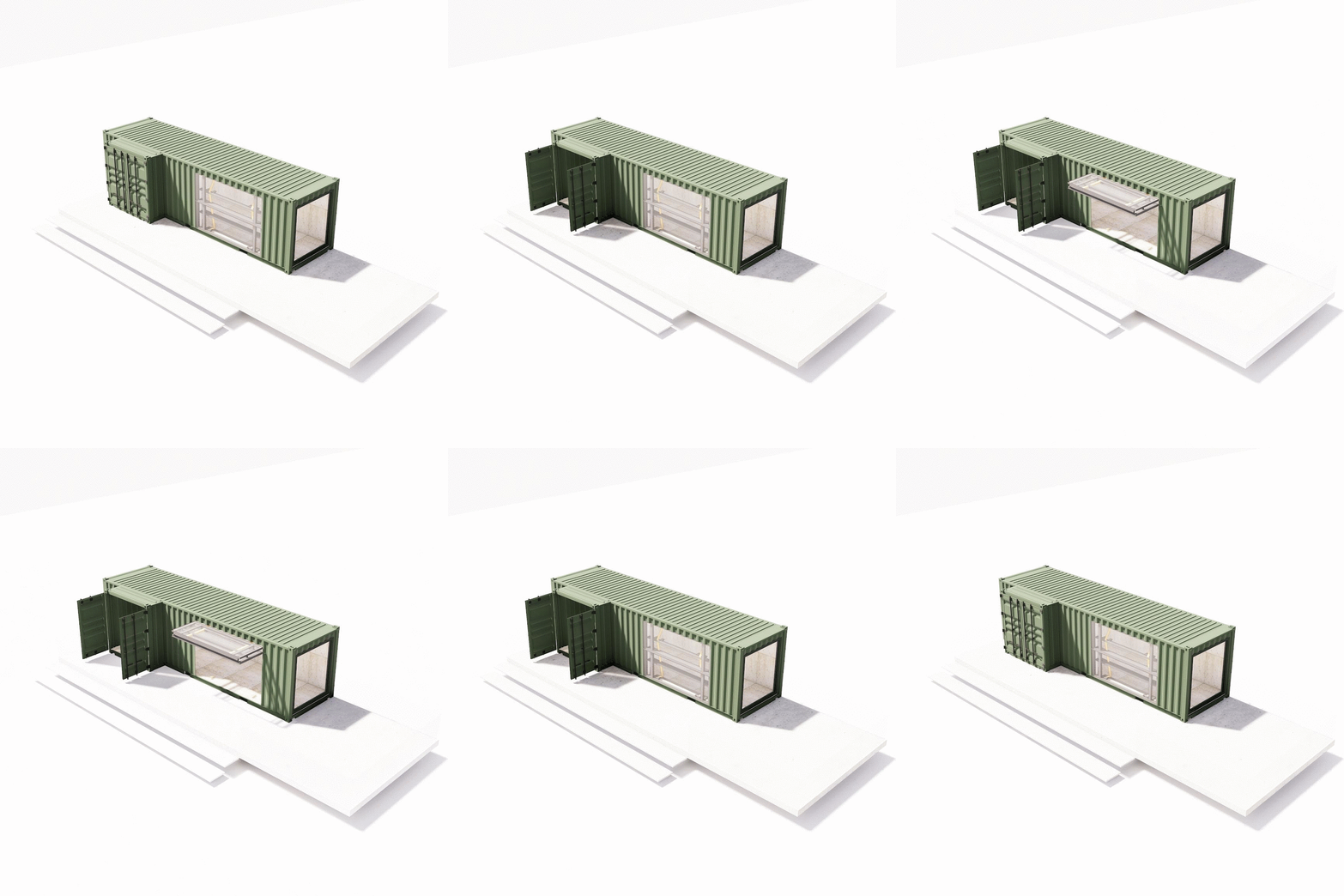
Off-Grid Studio
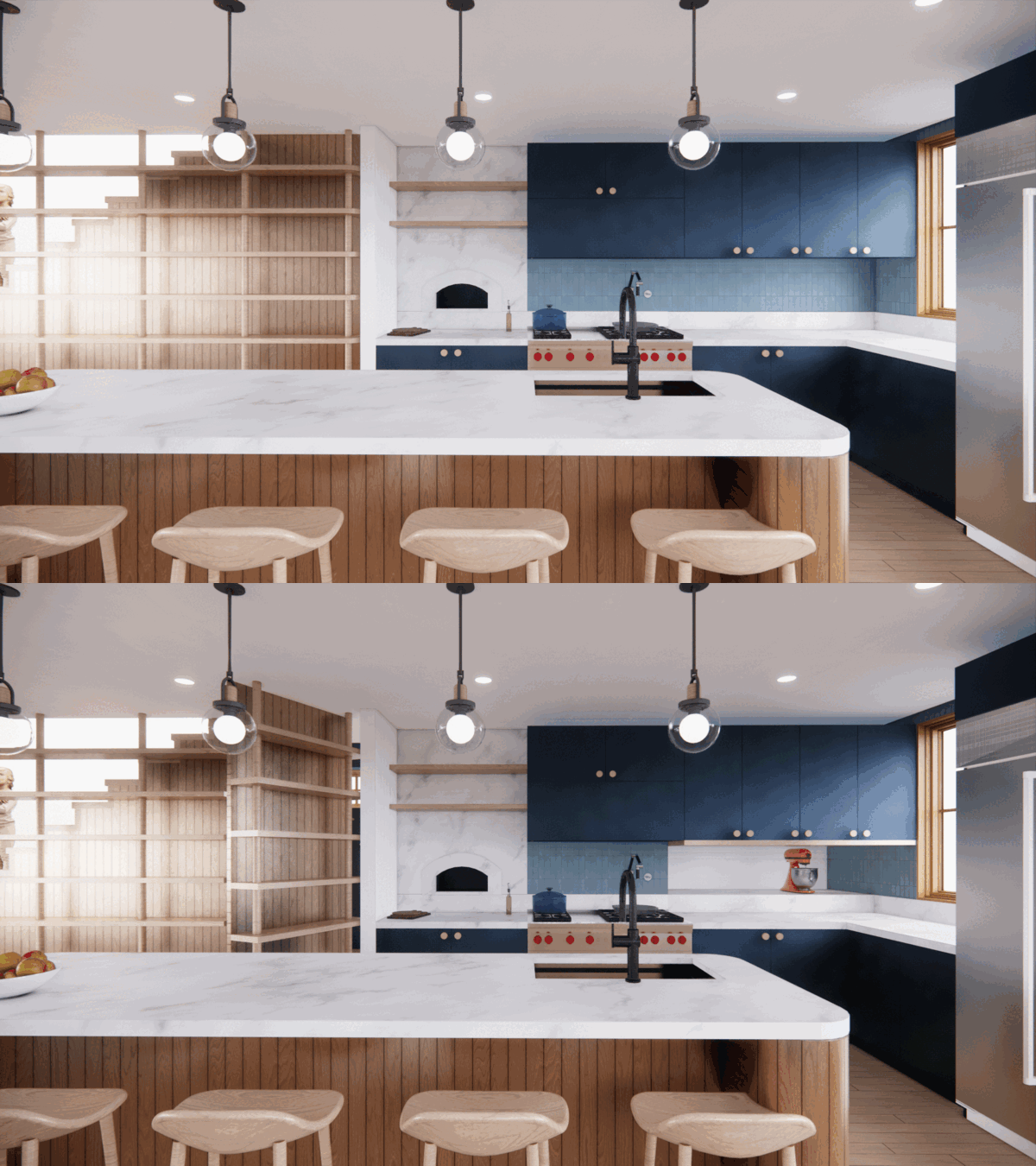
Queen Anne Kitchen - 2023
Even more things we keep coming back to:
You touch the door handle more often than you look at the facade. Budget accordingly.
Acoustics will ruin a good floor plan faster than bad lighting.
Value engineering usually engineers out the value. Better to build less, but build it right.
Negative space is a material, and it’s usually the hardest one to defend.
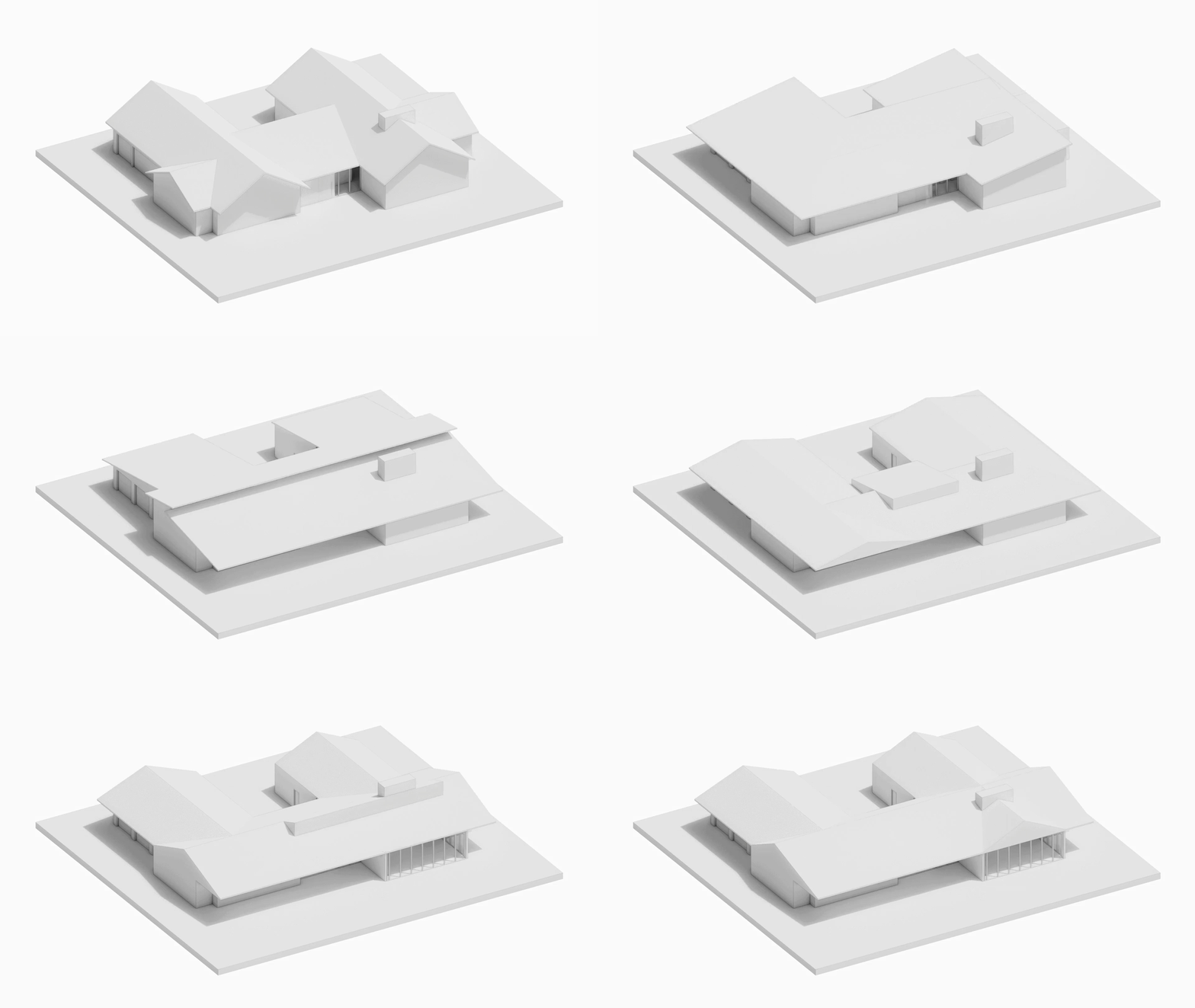
Walla walla Massing
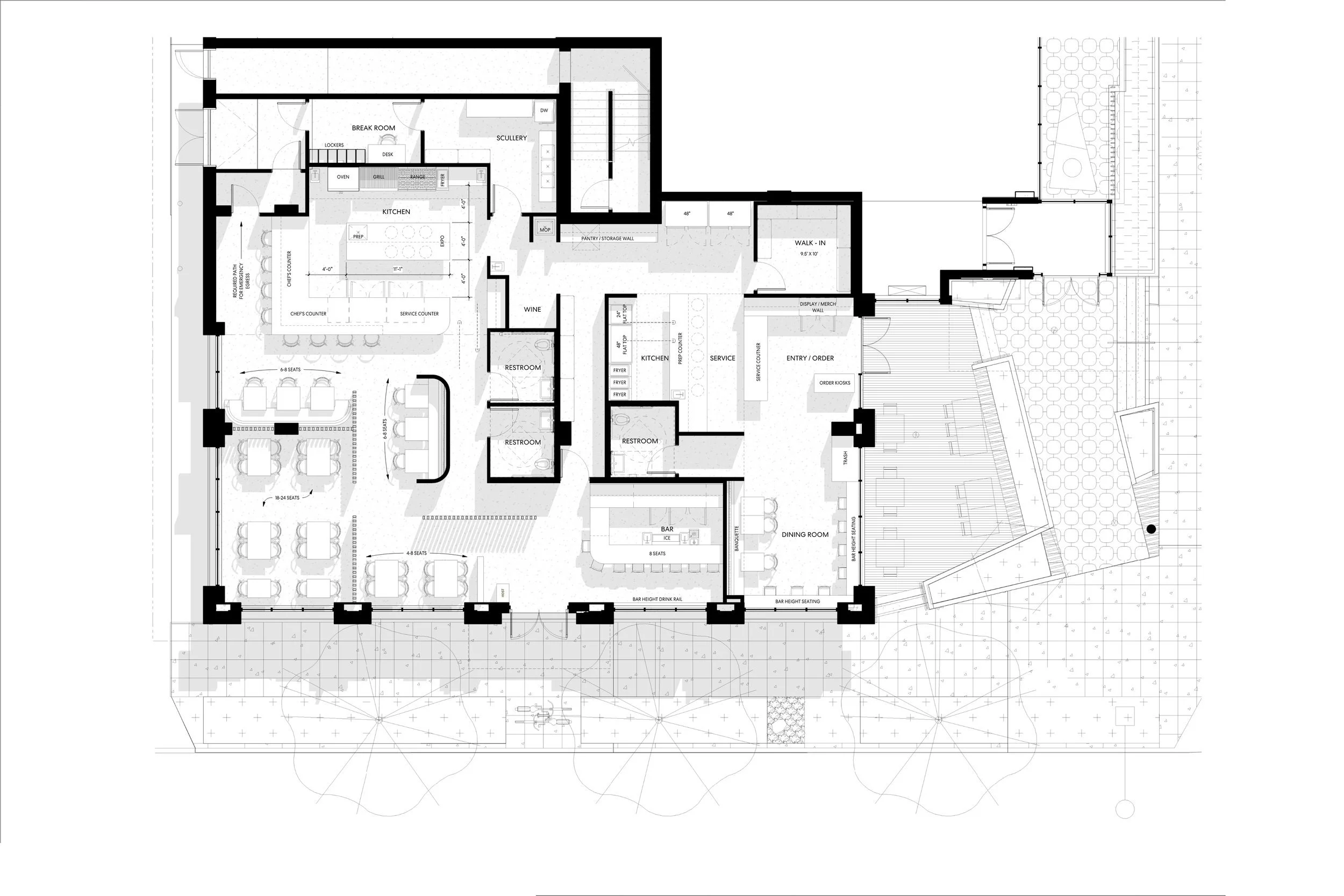
site: compromised
[ IN PROGRESS ]
[APPENDIX: A FEW COMMONLY ASKED QUESTIONS WE’VE RECEIVED]
Q: What should I know before buying land to build a custom home on?
Whether the parcel is buildable to the program you actually want, not just technically buildable. Setbacks, critical areas buffers, septic feasibility, utility stub locations, and slope constraints can collectively reduce a two-acre parcel to a 3,000 sq ft envelope — or less. Spend a few hundred dollars on a pre-purchase feasibility conversation before you spend several million on the land.
Q: How early in the process should we contact an architect?
Before you make an offer on a piece of land, if you can manage it. Zoning envelopes, setbacks, critical areas, easements, and utility availability can fundamentally change what a site is worth to you — and none of that shows up in a listing. A short feasibility conversation before you close saves the kind of money that doesn't come back.
Q: We want to build on a steep slope with water views. Is that a problem?
Steep slopes with water views are some of the best sites we work with, and some of the most technically demanding. Grading limits, shoreline setbacks, and structural requirements for hillside foundations all add cost and coordination time that flat-lot builders don't price for. The view is worth it. So is hiring someone who has done this before.
Q: What's the difference between hiring an architect and hiring a design-build firm?
A design-build firm designs what they can build efficiently. An independent architect designs what the project actually requires, then helps you find the team best suited to build it — and represents your interests during construction, not the contractor's. On a complex custom project, those are not the same thing, and the difference shows up in the details that get value-engineered away when nobody's watching.
Q: How much does an architect charge for a custom home?
Typically between 8% and 15% of construction cost for full services, depending on project complexity, site constraints, and scope. A remote island site with a shoreline variance costs more to document and administer than a straightforward urban infill. Architects who quote a flat fee before understanding the site are guessing — and usually guessing low to win the job. Ask what's included in construction administration before you sign anything.
Q: What does an architect actually do during construction, and do I really need that?
Construction administration — site visits, RFI responses, submittal reviews, change order evaluation — is where design intent either survives contact with the field or gets quietly compromised. If you've invested in getting the design right, skipping CA to save money is the architectural equivalent of proofreading a contract carefully and then not showing up to the signing. We don't offer design-only services for that reason.
Q: How do I vet an architecture firm before hiring them?
Ask to see projects that failed — not failed catastrophically, but ran over budget, hit a zoning wall, or had to be redesigned mid-construction. How a firm talks about those experiences tells you more than their portfolio does. Also ask who will actually be running your project day-to-day. At most firms, the principal who pitched you hands it off. Know that before you sign.
Q: Does it matter if the architect we hire isn't local to where we're building?
It matters less than clients assume and more than some architects admit. What matters is genuine familiarity with the jurisdiction, the climate, the contractor ecosystem, and the building culture — none of which you absorb from a single site visit. We work in regions we know well, and we're direct about where our experience ends. A talented firm that's never pulled a permit in San Juan County is going to learn something on your project. Decide whether you want to pay for that education.
Q: How do you handle projects on the San Juan Islands, where contractor access depends on a ferry schedule?
You plan for the ferry the way you plan for weather — as a fixed constraint, not a variable. That means material deliveries are sequenced well in advance, subcontractors are islanders when possible, and the construction schedule has float built in by design rather than by accident. Treating island logistics as a surprise is how projects go sideways by October.
Q: What makes New England coastal permitting different from the Pacific Northwest?
Historic district review boards, Coastal Zone Management regulations, and Chapter 91 waterway jurisdiction can add six to twelve months to a permitting timeline before a shovel touches the ground. The agencies are not the enemy — they exist for good reasons — but they require specific documentation, careful sequencing, and a firm that knows what each board actually needs to approve a project. We do. Budget the time accordingly.
Q: We've been told building in Walla Walla wine country is complicated. Is that true?
Agricultural zoning, septic requirements on county parcels, well permitting, and the high-desert climate — significant thermal swings, intense UV, occasional seismic activity — all make eastern Washington builds genuinely more complex than a Seattle infill project. The clients and contractors out there also have high standards. That's not a complaint. It's just the reality of working in a place where people take craft seriously, and you'd better too.
Q: How do you design a winery or tasting room that still functions well in 20 years when the operation has grown?
You design the infrastructure — drain placement, structural bays, utility rough-ins, door and loading locations — for the operation that's coming, not the operation that exists today. Winery clients almost always underestimate how quickly they outgrow their first facility. The architecture that ages best is the kind that leaves room to grow without requiring demolition to do it.
Q: We're considering a historic barn conversion. What do we actually need to know going in?
That the existing structure is simultaneously your greatest asset and your biggest unknown. Fieldstone foundations, timber framing, and hand-hewn mortise-and-tenon joinery are worth preserving. Decades of deferred maintenance, undersized sill plates, and agricultural-grade electrical are not. A thorough existing conditions assessment before design begins isn't optional — it's the difference between a realistic budget and a very expensive surprise in month four of construction.
Q: Why keep an old building? Why not tear it down and start fresh?
Because the bones of a well-built old structure — its mass, its materials, its relationship to the street — took decades to develop and can't be bought off a shelf. Adaptive reuse isn't sentimentality; it's a recognition that the existing building is an asset, not a liability. New construction can replicate the look of age. It can't replicate the thing itself.
Q: What should we be specifying if we want a building that holds up for 50 years without looking tired?
Materials that age honestly: zinc, weathering steel, concrete, thermally modified wood, marine-grade stainless at all fasteners. Avoid anything that requires a repainting schedule to maintain its appearance, or whose 10-year cost of ownership nobody calculated at spec time. The upfront delta between a durable material and a cheap one almost always closes by year fifteen.